
 🇺🇦
✅
🇺🇦
✅
K-1 Fiancé Visa Guide for Slavic Brides
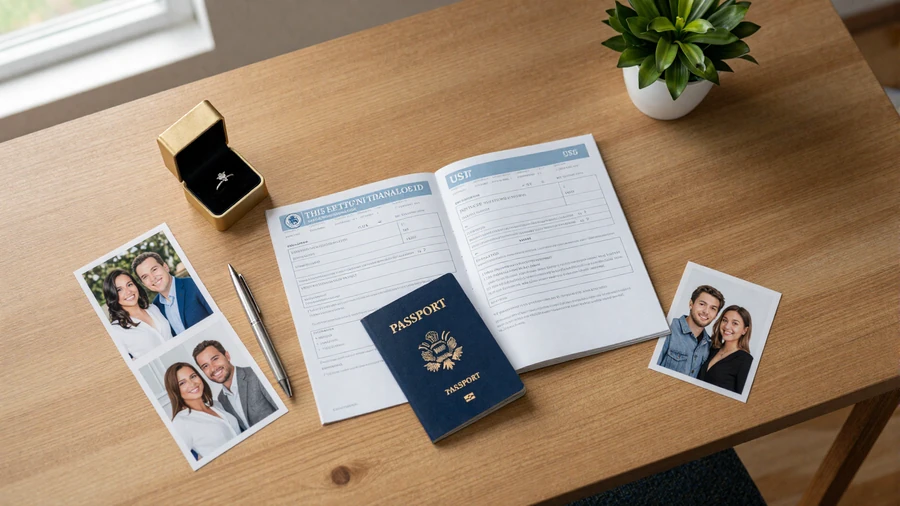
The K-1 fiancé visa is the primary legal pathway for American men bringing a Slavic bride to the United States. It costs approximately $2,290 in government fees, takes 6-12 months to process, and requires proof that you have met your fiancée in person within the past two years. Of the thousands of international couples who use platforms like Drogul Slavic Women Dating, the vast majority choose the K-1 over the CR-1 spousal visa because it allows couples to reunite faster and marry on American soil within 90 days of arrival.
In 2025, USCIS processed over 48,000 K-1 visa petitions, with Ukraine, Russia, and Poland consistently ranking among the top 15 countries of origin for fiancée applicants. Drogul's immigration support team has guided thousands of couples through this process, achieving a 96% approval rate - well above the national average - through meticulous documentation and preparation.
This guide breaks down the entire K-1 visa process into clear, actionable steps. Whether you have already found your Slavic partner or are still exploring profiles of Ukrainian women and Russian women, understanding the visa pathway early gives you a strategic advantage. You will know exactly what to expect, what to collect, and how to avoid the most common mistakes that delay or derail applications.
Key Fact: The K-1 fiancé visa (Form I-129F) allows a U.S. citizen to bring their foreign-born fiancé(e) to the United States. Once admitted, the couple must marry within 90 days. After marriage, the spouse applies for Adjustment of Status to become a permanent resident (green card holder).
The Complete K-1 Visa Process - Step by Step
The K-1 fiancé visa process follows a predictable sequence across eight stages. Each step has specific requirements, timelines, and potential pitfalls. Here is exactly what happens from the day you file your petition to the day your Slavic fiancée arrives in the United States.
Step 1: File Form I-129F (Petition for Alien Fiancé)
The American petitioner (you) files Form I-129F with USCIS along with a $535 filing fee. This petition establishes that you are a U.S. citizen, that you and your fiancée have met in person within the past two years, and that you both intend to marry within 90 days of her arrival. Include evidence of your relationship: photos together, communication logs, travel receipts, and a personal statement. Drogul strongly recommends collecting all relationship evidence - photos, flight tickets, hotel receipts, chat transcripts - from the very beginning of your relationship.
Step 2: USCIS Processing (6-9 Months)
After filing, USCIS reviews your petition. Processing times vary by service center but typically range from 6 to 9 months. During this period, USCIS may issue a Request for Evidence (RFE) if documentation is incomplete. Double-check your application before submission - administrative errors and missed information are among the most frequent reasons for K-1 visa delays. You will receive a Notice of Action (Form I-797) confirming receipt, and eventually an approval notice.
Step 3: National Visa Center (NVC) Processing
Once USCIS approves the I-129F, the case transfers to the National Visa Center. NVC assigns a case number and forwards the file to the U.S. Embassy or Consulate in your fiancée's home country. This transfer typically takes 4-6 weeks. NVC sends your fiancée instructions on how to prepare for the visa interview, including required forms and fees.
Step 4: DS-160 Application and Embassy Interview
Your fiancée completes the DS-160 online nonimmigrant visa application and pays the $265 visa application fee. She then schedules an interview at the U.S. Embassy - in Kyiv for Ukrainian women, Moscow for Russian women, or the respective embassy in her country. The interview is the most critical step: the consular officer evaluates whether the relationship is genuine and whether your fiancée meets admissibility requirements.
Step 5: Medical Examination
Before the interview, your fiancée must complete a medical examination with an embassy-approved physician. This includes a physical exam, vaccinations (as required by U.S. immigration law), blood tests, and a chest X-ray. Costs range from $200 to $500 depending on the country. The sealed medical packet is presented at the interview - do not open it.
Step 6: Visa Issuance and Travel
If approved, the embassy issues a K-1 visa valid for six months. Your fiancée has this window to enter the United States. Most couples plan the travel date strategically - allowing time for wedding preparations while staying well within the six-month validity period. The K-1 visa allows a single entry only.
Step 7: Marriage Within 90 Days
After your fiancée arrives in the United States, you must legally marry within 90 days. This is a firm legal requirement - failure to marry within this period means she must leave the country. Plan your wedding timeline before she arrives: obtain a marriage license, arrange any ceremony details, and ensure any state-specific waiting periods are accounted for.
Step 8: Adjustment of Status (Green Card)
After marriage, your spouse files Form I-485 (Application to Register Permanent Residence) along with Form I-765 (Employment Authorization) and Form I-131 (Travel Document). The filing fee for I-485 is $1,225. Once approved, she receives a conditional two-year green card. After two years, you jointly file Form I-751 to remove conditions and obtain a permanent green card.
Required Documents Checklist
Proper documentation is the single biggest factor in K-1 visa approval. Drogul's immigration support team recommends preparing these documents well in advance - many couples start collecting evidence from their very first video call. Here is the complete checklist organized by petition stage.
For the I-129F Petition (U.S. Petitioner)
- Proof of U.S. citizenship (passport copy, birth certificate, or naturalization certificate)
- Completed Form I-129F with all sections filled accurately
- Passport-style photos of both petitioner and beneficiary
- Evidence of in-person meeting within the past two years (flight tickets, passport stamps, boarding passes, hotel receipts, dated photos together)
- Proof of any prior marriages being legally terminated (divorce decrees, death certificates)
- Evidence of genuine relationship (communication logs, screenshots of video calls, letters, gift receipts, shared photos spanning the relationship)
- Form I-134 Affidavit of Support demonstrating financial ability to support your fiancée
- Personal statement describing how you met, your relationship history, and your future plans
For the Embassy Interview (Fiancée)
- Valid passport with at least six months remaining validity
- DS-160 confirmation page with barcode
- Interview appointment letter from the embassy
- Sealed medical examination packet (from approved physician)
- Police clearance certificates from every country she has lived in for 6+ months after age 16
- Birth certificate (original and translated into English)
- Evidence of relationship (mirroring the petitioner's submissions)
- Two recent passport-sized photographs meeting U.S. visa photo requirements
💡 Drogul Pro Tip: Start a dedicated folder - digital and physical - the day you begin communicating with your match. Save every video call screenshot, every message exchange, every flight confirmation. Couples who document their relationship from day one have significantly higher approval rates. Many Ukrainian women on Drogul are experienced with this process and will actively help collect mutual evidence.
K-1 Visa Costs and Timeline Breakdown
| Expense | Estimated Cost | Timeline | Notes |
|---|---|---|---|
| I-129F Filing Fee | $535 | 6-9 months processing | Filed by U.S. petitioner with USCIS |
| DS-160 Visa Application | $265 | 2-4 weeks after NVC | Paid by the fiancée at embassy |
| Medical Examination | $200-$500 | Before embassy interview | Varies by country and vaccinations needed |
| Travel for Interview | $500-$1,500 | 1-2 days | If fiancée must travel to embassy city |
| Translation & Notarization | $100-$300 | Ongoing | Birth certificates, police records, divorce decrees |
| Adjustment of Status (I-485) | $1,225 | 8-14 months after marriage | Filed after wedding in the U.S. |
| Total Estimated Cost | $2,290-$4,325+ | 6-12 months | Does not include travel to meet in person |
Based on USCIS fee schedule effective 2025-2026 and Drogul immigration team estimates. Fees subject to change.
The $2,290 base cost covers only mandatory government filing fees. Most couples should budget $4,000-$6,000 total when including medical exams, document translation, notarization, and travel expenses for the embassy interview. If your fiancée lives far from the embassy city - common for Russian women outside Moscow - interview travel costs can be significant. Drogul's immigration consultants help couples identify cost-saving strategies and avoid unnecessary expenses.
Women Verified and Ready for Serious Commitment
🇺🇦
✅
 🇷🇺
✅
🇷🇺
✅
Polina
 🇵🇱
✅
🇵🇱
✅
Agnieszka
 🇺🇦
✅
🇺🇦
✅
Nataliia
 🇧🇾
✅
🇧🇾
✅
Veronika
 🇷🇴
✅
🇷🇴
✅
Alina
 🇺🇦
✅
🇺🇦
✅
Kristina
 🇨🇿
✅
🇨🇿
✅
Milena
How to Prepare for the Embassy Interview
The embassy interview is the make-or-break moment in the K-1 visa process. Your fiancée will meet a consular officer alone and answer questions designed to determine whether your relationship is genuine. Here is how to prepare her - and yourself - for success.
- Practice common interview questions together. Consular officers ask about how you met, your communication frequency, your future plans, and details about each other's daily lives. Your fiancée should be able to comfortably describe your relationship timeline, your job, your hobbies, and your family.
- Organize documents in a clear, labeled binder. Place the most important evidence first: the I-797 approval notice, DS-160 confirmation, passport, and sealed medical packet. Behind that, organize photos chronologically, communication evidence, and financial documents. A well-organized binder signals a serious, legitimate petition.
- Bring printed communication evidence. Select representative samples of your communication - not every message, but a curated selection spanning the entire relationship. Include video call screenshots with timestamps, printed emails, and chat excerpts that show emotional depth and daily connection.
- Prepare for questions about age differences. If there is a significant age gap, the officer may ask about it directly. Your fiancée should be prepared to explain honestly and confidently why your relationship works - shared values, mutual respect, and compatible life goals matter more than numbers.
- Stay calm and honest. The single most important rule: never lie. Consular officers are trained to detect inconsistencies. If your fiancée does not understand a question, she should ask for clarification rather than guessing. Honest, straightforward answers - even imperfect ones - are far better than rehearsed scripts that sound unnatural.
Common Mistakes That Delay or Derail K-1 Applications
Drogul's immigration support team has reviewed thousands of K-1 applications over two decades. These are the most frequent - and avoidable - mistakes that cause delays, Requests for Evidence, or outright denials.
1
Insufficient Relationship Evidence
The number one reason for K-1 denials is failing to demonstrate a genuine relationship. A handful of photos from a single trip is not enough. USCIS and consular officers want to see a pattern: regular communication over months, multiple meetings if possible, evidence of shared plans, and mutual knowledge of each other's lives. Start documenting from day one.
2
Administrative Errors on Forms
Misspelled names, inconsistent dates, blank required fields, and unsigned forms are shockingly common. Every error triggers a delay or rejection. Drogul recommends having your application reviewed by an immigration lawyer before submission. A $200-$500 legal review can save months of processing delays.
3
Missing the In-Person Meeting Requirement
You must have met your fiancée in person within the two years preceding the I-129F filing. There are extremely limited religious or cultural waivers, but they rarely apply. If your meeting evidence is older than two years, you will need to visit her again before filing. Plan your timeline carefully.
4
Inadequate Financial Documentation
The Affidavit of Support (Form I-134) requires proof that you can financially support your fiancée at 125% above the federal poverty level. Include recent tax returns, pay stubs, bank statements, and employment verification letters. If your income alone is insufficient, a joint sponsor can supplement your petition.
5
Failing to Disclose Previous Petitions
If you have previously filed a K-1 petition for another person, you must disclose it. Under IMBRA (International Marriage Broker Regulation Act), you are limited in the number of petitions you can file within a given period. Full disclosure is legally required and failure to disclose can result in automatic denial.
🚨 Critical Warning: Never pay anyone who promises to "guarantee" visa approval or "speed up" processing through unofficial channels. K-1 visa processing follows strict USCIS timelines, and no third party can accelerate government review. If uncertain about any step, consult a licensed immigration attorney. Drogul's immigration team can recommend vetted legal professionals who specialize in fiancé visa cases.
Key Takeaways: Your K-1 Visa Action Plan
- Budget $2,290-$4,325+ for government fees, medical exams, translations, and interview travel
- Expect 6-12 months from filing I-129F to your fiancée's arrival in the United States
- Meet in person within two years of filing - this is a non-negotiable requirement
- Document everything from the first message: photos, call logs, travel receipts, chat screenshots
- Prepare for the embassy interview with organized documents and practiced answers
- Marry within 90 days of your fiancée's arrival - plan your wedding before she lands
- File Adjustment of Status promptly after marriage to begin the green card process
- Consult an immigration lawyer if you have any prior petitions, complex circumstances, or questions
The K-1 fiancé visa process is straightforward when approached methodically. Thousands of Drogul couples have navigated it successfully - from first message to wedding day in an average of 8 months. The key is starting early, documenting thoroughly, and seeking expert guidance when needed. Whether you are just beginning to explore profiles on the Drogul homepage or already planning your first trip to meet a Ukrainian woman or Russian woman, understanding the visa pathway puts you miles ahead of the process.